Chef Robotics Reaches 100 Million Servings Milestone, Signaling Shift in Food Automation Landscape

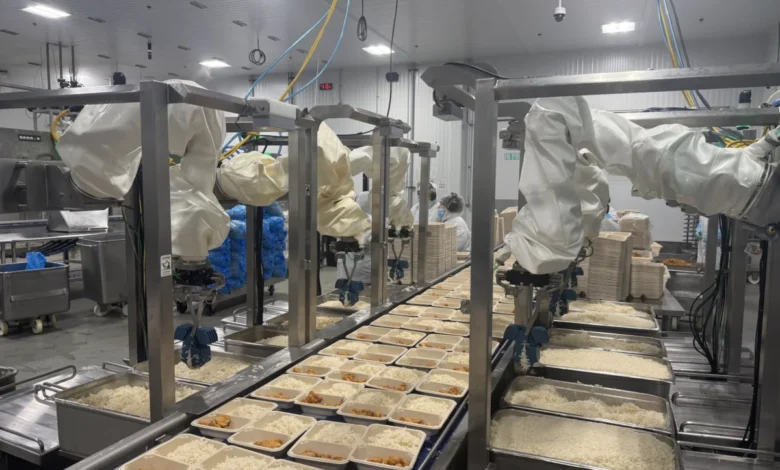
Chef Robotics, a company at the forefront of AI-powered food automation, has announced a significant milestone: its robotic systems have successfully prepared and deposited 100 million individual food servings. This achievement underscores the company’s pivot from early aspirations in fast-casual restaurants to a more robust presence in large-scale food manufacturing and institutional catering. The journey, marked by the inherent complexities of automating food handling, offers a compelling case study in the evolution of robotics within the food industry, a sector notoriously challenging for automation.
The Perilous Path of Food Automation: A History of Setbacks
The food automation industry has long been characterized by a high rate of failure, earning it a reputation as a "startup graveyard," as acknowledged by Chef Robotics CEO Rajat Bhageria. This sentiment is echoed by the industry’s history, which is replete with ambitious ventures that ultimately faltered. One prominent example is Chowbotics, a startup that developed a salad-making robot. Acquired by DoorDash in 2021, Chowbotics was unfortunately shuttered by its parent company in July 2022, just over a year after the acquisition. This closure highlighted the difficulties in scaling robotic food preparation solutions, even for seemingly straightforward tasks like assembling salads.
Another high-profile casualty was Zume, a company that aimed to revolutionize pizza delivery through automation. Valued at $400 million at its peak, Zume’s ambitious plans ultimately collapsed in late 2023. The company’s struggles served as a stark reminder of the immense technical and logistical hurdles involved in automating processes that have traditionally relied on human dexterity, sensory perception, and adaptability. The very nature of food – its variable textures, shapes, and weights – presents a unique set of challenges for robotic manipulation.
Chef Robotics’ Strategic Pivot: From Restaurants to Manufacturing
Rajat Bhageria, CEO of Chef Robotics, believes his company has identified a viable workaround to the industry’s historical pitfalls. The core of Chef Robotics’ strategy lies in leveraging AI-powered robot arms to automate labor-intensive tasks within large-scale food production. Initially, the company explored opportunities within the fast-casual restaurant sector, a vibrant but highly competitive market. However, Chef Robotics soon recognized the greater potential and more manageable challenges in food manufacturing.
This strategic pivot proved to be a turning point. The company has since established a strong foothold in the food manufacturing industry, securing enterprise clients such as Amy’s Kitchen and Chef Bombay. Furthermore, Chef Robotics has partnered with one of the nation’s largest school lunch providers, demonstrating its capability to serve the demanding requirements of institutional food service. This focus on larger, more predictable production environments has allowed Chef Robotics to refine its technology and achieve scalable success.
The 100 Million Serving Milestone: Defining Success in Food Automation
The announcement of 100 million servings prepared by Chef Robotics’ systems marks a significant operational achievement. A "serving," as defined by a company spokesperson, refers to a portion of food deposited by the robots into a meal tray. It is important to note that this does not represent a complete meal but rather a single component. This distinction is crucial, as it highlights the granular nature of the automation Chef Robotics provides, focusing on the precise assembly and placement of individual food items.
This milestone signifies a period of intense activity and growth for Chef Robotics, a direct result of its strategic decision to target institutional-scale customers rather than individual restaurants. The sheer volume of servings processed indicates a high level of operational efficiency and reliability achieved by their robotic solutions in demanding production settings.
Expanding Horizons: Targeting "Smaller Kitchens" and New Verticals
Looking ahead, Chef Robotics is set to expand its reach into what the company terms "smaller kitchens." This designation might seem counterintuitive, but Bhageria clarifies that it encompasses a diverse range of operations, often those that still operate at a significant scale. One of the company’s recently signed "smaller kitchen" clients is identified as "one of the largest airline catering companies in the world." This partnership illustrates Chef Robotics’ adaptability to specialized and high-volume food preparation environments beyond traditional manufacturing.
The company is also actively pursuing other emerging and established sectors. Chef Robotics has articulated plans to expand into "ghost kitchens," which are delivery-only food preparation facilities that operate without a physical storefront. These kitchens, often serving multiple virtual restaurant brands, present a growing market for automated food assembly. Beyond ghost kitchens, Bhageria has indicated future expansion targets that include fast-casual restaurants, stadiums, and even correctional facilities, demonstrating a broad vision for the application of their automation technology across various food service landscapes.
The Power of Data: Fueling AI Advancement in Food Handling
A critical element of Chef Robotics’ ongoing success is the vast amount of data generated from its operational deployments. The company is actively feeding data from the 100 million servings into its sophisticated AI models for food handling and packaging. This continuous data loop is essential for improving the intelligence and capabilities of their robotic systems.
Bhageria emphasizes the "inherent nature of food" as a significant challenge for robotic manipulation. Food products are often slippery, malleable, and lack predictable proportions, making them difficult for robots to grasp, move, and place accurately. Chef Robotics’ AI models are designed to learn and adapt to these complexities. By analyzing data from millions of handling instances, the AI can develop more nuanced strategies for interacting with different food types, leading to improved precision, reduced waste, and enhanced operational efficiency. This iterative process of data collection, AI training, and system refinement is central to Chef Robotics’ strategy for continued innovation and business scaling.
Implications for the Future of Food Production
Chef Robotics’ trajectory offers significant implications for the broader food industry. The company’s success in overcoming the historical challenges of food automation suggests a potential paradigm shift in how food is prepared and distributed at scale.
Increased Efficiency and Reduced Labor Costs: For large-scale food producers and institutional caterers, the deployment of AI-powered robotics can lead to substantial increases in operational efficiency. Automation can enable higher throughput, consistent quality, and a reduction in reliance on manual labor, which is increasingly subject to cost fluctuations and labor shortages.
Enhanced Food Safety and Consistency: Robots, when programmed correctly, can perform tasks with a high degree of precision and consistency, minimizing human error. This can translate to improved food safety standards and a more uniform product quality, which is particularly important for large-scale operations and brands.
Adaptation to Evolving Consumer Demands: The rise of ghost kitchens and the growing demand for convenient, pre-packaged meals are trends that automation is well-positioned to address. Chef Robotics’ technology can enable these operations to scale rapidly and meet the demands of a consumer base increasingly reliant on delivery and off-premise dining.
Technological Advancement in AI and Robotics: The challenges posed by food handling are driving innovation in areas such as tactile sensing, advanced grasping techniques, and sophisticated AI algorithms for object recognition and manipulation. Chef Robotics’ work contributes to the broader advancement of robotics and AI, pushing the boundaries of what is achievable in complex, real-world environments.
Broader Context: The TechCrunch Robotics & AI Summit 2026
This announcement from Chef Robotics arrives at a time when the intersection of artificial intelligence and robotics is a major focus for the technology sector. The TechCrunch Robotics & AI Summit, scheduled to take place in San Francisco from October 13-15, 2026, is expected to convene leading figures from these fields. Such an event would provide a platform for companies like Chef Robotics to showcase their advancements, discuss industry trends, and forge new partnerships.
The summit would likely feature discussions on the practical applications of AI in robotics, the challenges of scaling automation, and the ethical and societal implications of these technologies. For an industry that has seen its share of setbacks, events like the TechCrunch Robotics & AI Summit are crucial for fostering collaboration, sharing insights, and driving forward the development of robust and viable automation solutions. The progress made by companies such as Chef Robotics, evidenced by milestones like the 100 million serving mark, will undoubtedly be a significant topic of conversation at such gatherings, signaling a maturing and increasingly impactful sector.